
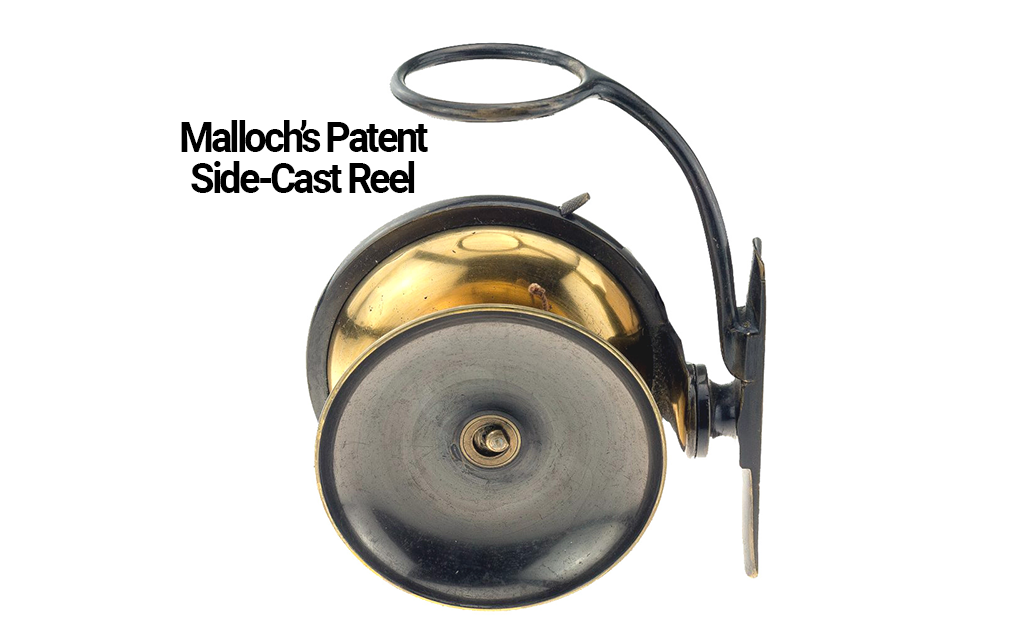
When PD Malloch of Perth, Scotland, patented his side-caster in 1884, he changed the thinking in terms of casting, spinning and worming. Most of us will have seen many variations on these reels in some form; brass, alloy, brass & alloy, single wind, geared and a few odd ball variants to boot.
However not everyone could afford a brand new reel, tackle way back when amounted to weeks and sometimes months of wages (it still does for some! Ed). So the ingenious engineers and handymen, especially in Yorkshire, set about making their own side-casters and their engineering background did ’em proud lad!
Many production reels, including the famous Illingworth & Chippindale models, were Yorkshire born. One such ingenious conversion is shown here.
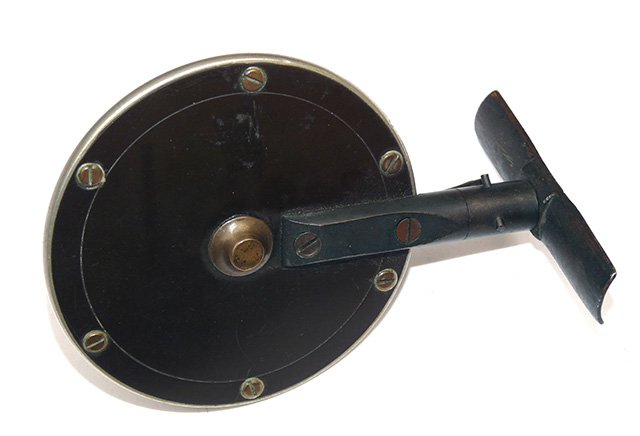
This side-casting reel started life as a London pattern ebonite and brass fly reel with German silver rims. You can see the original screws on the back plate; these supported the foot block and pillars. It dates c 1880-1900 and is 3-1/2” in diameter. All that remains is the ebonite backplate and the rear brass flange of the drum. A machine-turned alloy tapered drum has been made as well as a modified spindle. A simple swinging arm clip holds the drum in place and a brass twisting foot arrangement is locked and released by a steel spring screwed against the foot.
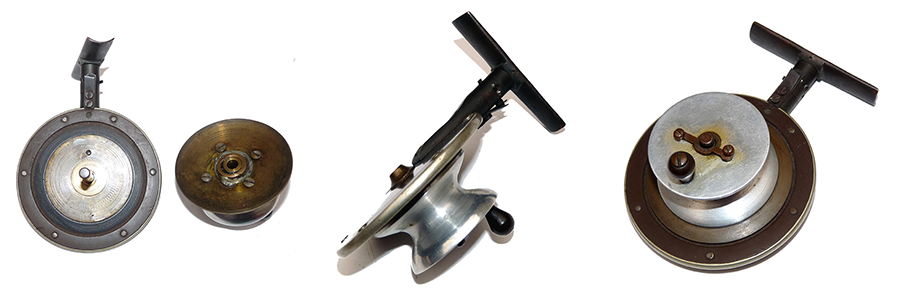
This reel would have been easy to convert for the miners, engineers and people whose life was about making do, make and mend or make it up. It spins well albeit the drum is a bit heavy.
I can imagine a very proud engineer either getting an extra bacon butty from the Mrs when he brought this home, or a slap on the back of the head as he should have been working overtime for the family!? Either way, it gives us a glimpse into the past 100 years demonstrating the thinking angler will always prevail.
[table id=5 /]
(Tags: fm ukfff nafff )
