
FROM ESSEX TO ALNWICK
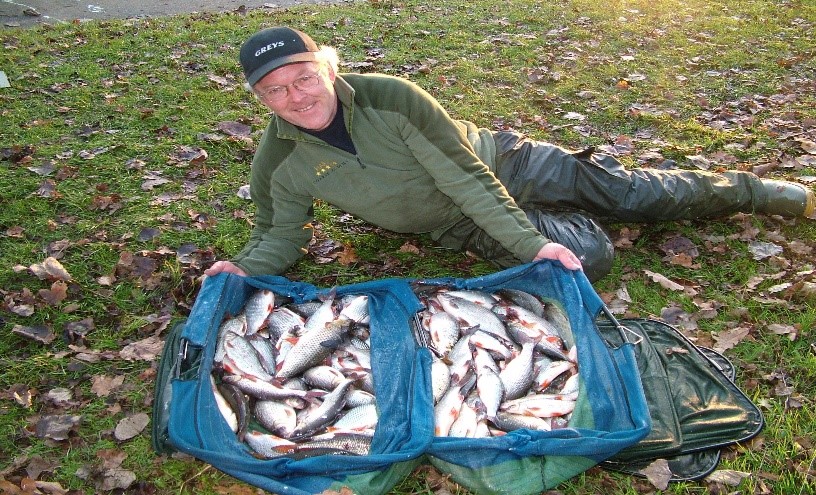
I began working for Hardy and Greys while living in Essex. One of my favourite haunts at the time was Gloucester Park Lake in Basildon. Mick Toomer ran regular matches there throughout the winter and the roach fishing was superb. This massive haul of red fins even beat the carpers. Only trouble was, getting so involved developing products for such an iconic outfit like Hardy meant a lot of travelling. It all started when I bumped into the area representative for the company in a local tackle shop. He asked what I was up to. At the time I had just sold my business in London and moved to Leigh on Sea. I had taken a year off but was beginning to miss the tackle trade. I worked one day a week for Wickford Angling Centre, but when Hardy came calling, I couldn’t resist travelling up north for a meeting. I got a job straight away working with the Product Manager and my life changed.
LOST IN TRANSIT
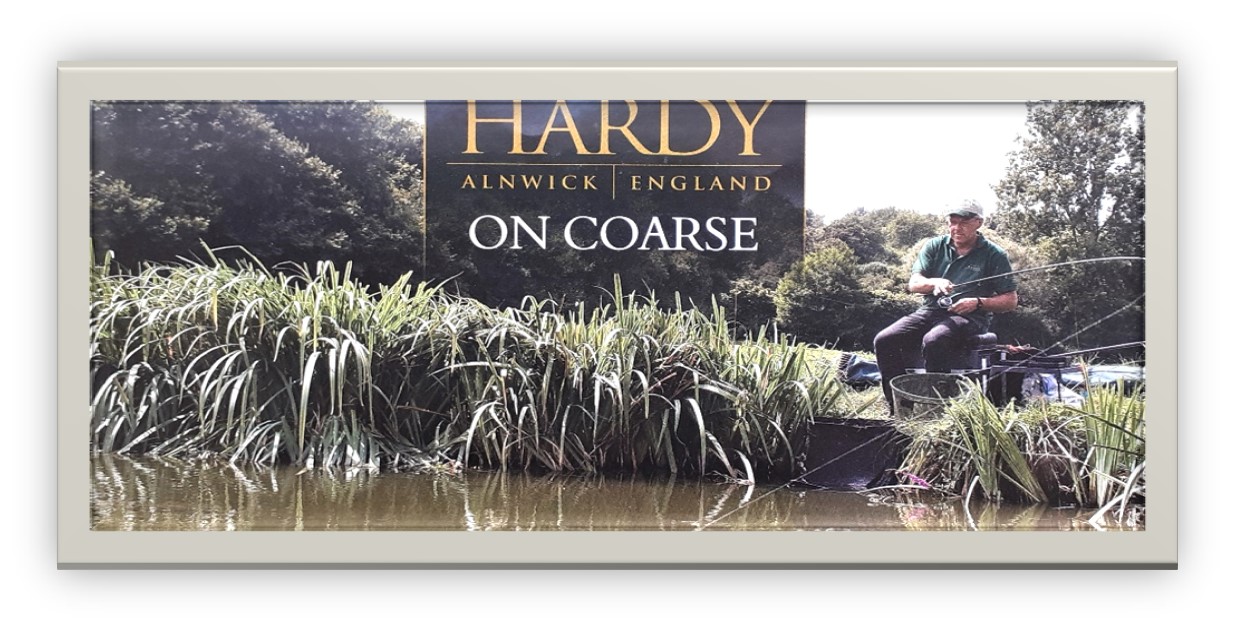
Suddenly I was spending a lot of my time flying up to Alnwick to work in the office, then came trips to the Far East, followed by a week testing out new Hardy Marksman rods over in France! That’s where this photo was taken, pushing the first samples to their limits on lively carp, in swelteringly hot conditions. The first Marksmans were designed by Alan Yates, the then Product Development Manager. He asked me to fish with and rate all the initial samples. I liked the traditional green colour and top-quality cork handles, but wasn’t so keen on the almost see-through whippings and white quivertips. I discovered a few minor issues with a couple of the rods. These were quickly sorted out before the first production run. Next step was the launch at a big tackle show, where the above poster was draped across the main entrance to let the world know Hardy Marksman had arrived.
GOODBYE SOUTH
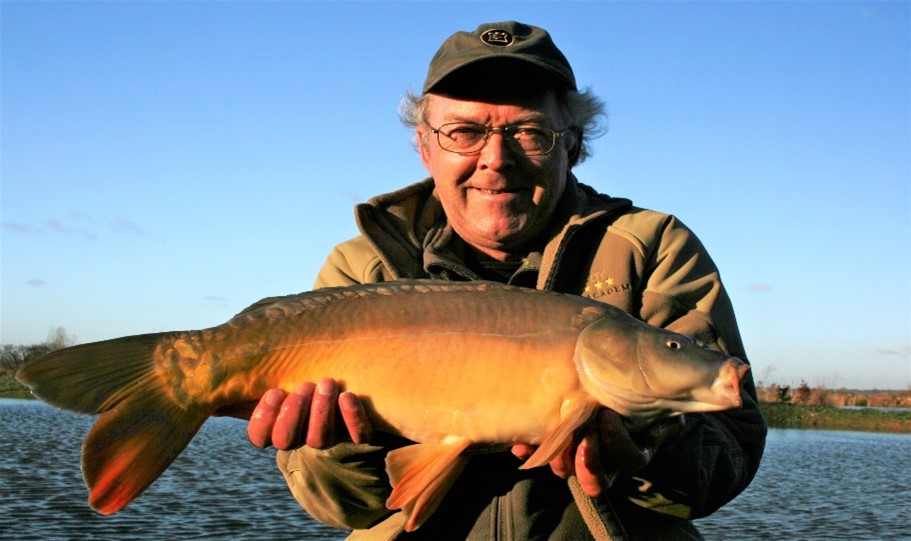
Alan Yates moved on and I was offered the job of Product Development Manager at Hardy and Greys, the only proviso being I moved up to Alnwick. This lump of a carp turned up on one of my last fishing trips in Essex, at another favourite haunt, Churchgate Fishery. I was only using light line and a small hook, combined with the 13ft Specialist Marksman Specimen Float Rod. I landed several big fish like this on that model, a few in matches that raised some eyebrows. The Marksman rods were taking off but there was about to be another twist to their story, not long after I relocated up north. That would have to wait while I searched out a new house in Alnwick, which eventually happened. It was like a palace compared to my semi-detached residence just outside Southend, built in 1832 and quaint outside, but beautifully modernised inside. People called it the Tardis because it was massive.

LONG WINTERS
To say it was colder up north would be an understatement! I hadn’t been living up there for long and had just got back from a business trip to Europe. Snow started to fall as my plane landed at Newcastle Airport. I managed to get the car parked up in my back yard as the A1 closed and this is what it looked like the next morning. Worse was to come and it eventually took me several weeks to dig it out. It got a chilly out on the bank too, with the handful of local coarse fisheries I eventually found to explore. On my first match the locals were all wearing rubber surgical gloves. I asked what that was all about and they told me I would soon see, as the icy north easterly winds picked up and the snow showers started. It really was artic, compared to living in the kinder climate of the River Thames Estuary and regularly visiting the longest pier in the world at Southend on Sea.
LONELY PLACES
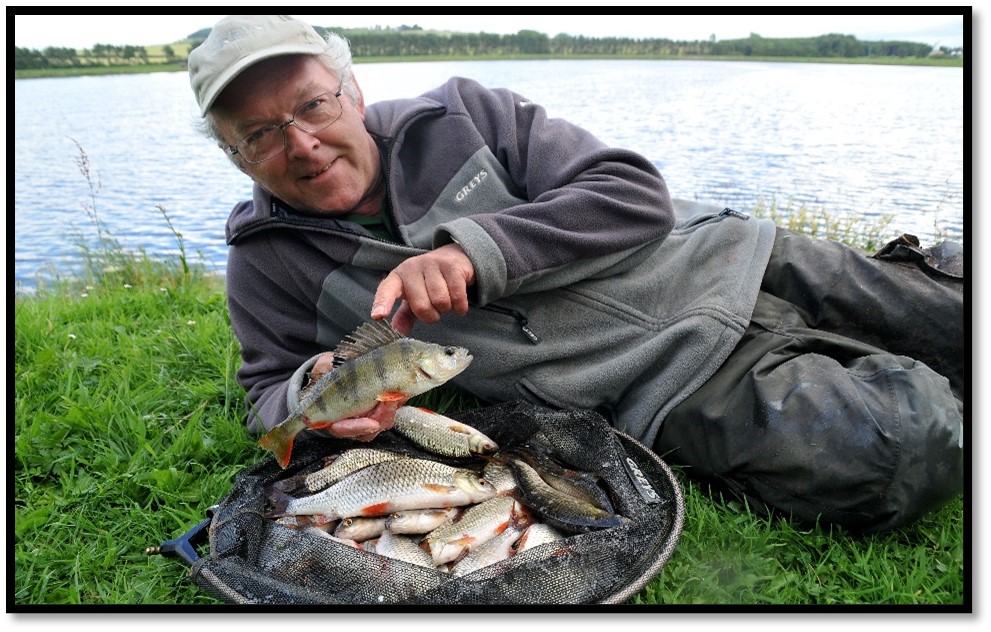
The northeast isn’t packed with coarse venues, but there are some interesting ones. I spent most of my fishing time in the area at Whittle Dene Reservoirs, run by Northumbrian Water Authority, near Hexham. The Great Southern, pictured behind me in this photo was my favourite, a long hike but worth the effort for superb out-in-the-wilds roach and perch fishing. Fontburn Reservoir was even wilder, but also gave me some fantastic roach sport. Then there was the oddly named Blubbery Lake, set in a wooded valley just north of Morpeth. That small water was full of fish and I spent many happy hours there. A few trips to the mighty River Tyne produced some decent hauls of dace, but most of it is salmon and trout only these days, in what is after all, prime game fishing territory.
ANOTHER LAND
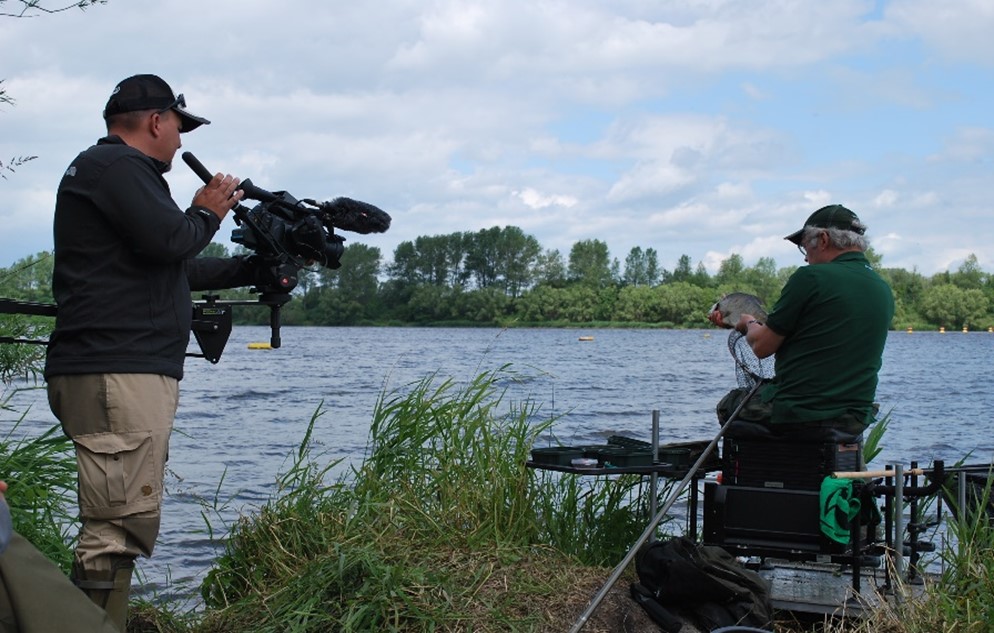
Hardy and Greys had a strong presence in Germany and the fishing magazines over there enjoyed a massive following. They didn’t just do printed features, also filming out on the bank, presenting a DVD each month on the front cover. The magazine editor of Blinker asked me to show my English approach on the River Ebro. They love using big and heavy feeders over there and the crew all looked surprised when they saw what I was going to use. They looked even more surprised when I landed a dozen bream inside 40 minutes, using a Marksman 13ft Extreme Feeder rod. I was just lucky of course, but I milked the situation as if it was just another normal day out on the bank.
THE FUJI FACTOR
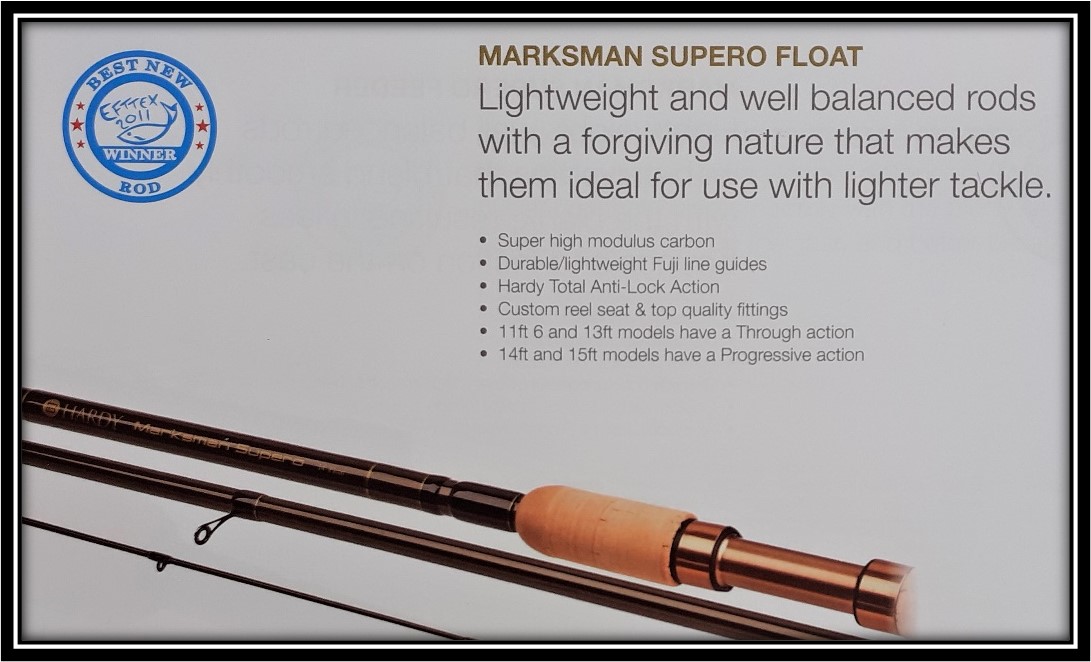
Although the first batch of Hardy Marksman rods sold okay, I was itching to take the concept on a stage further. I got my chance when Fuji announced they were going to discontinue their famous SiC line guides. Their Alconite rings were just as good in my opinion, with the bonus of being less expensive, which is why the new range of Marksman Superos ended up with cheaper RRPs. I also took this opportunity to sort out the cosmetics with richer green whippings and gold tippets, along with a gold reel seat. I wanted these rods to look like they had come from the royalty side of angling, but I didn’t stop there. I had become good friends with the factory that made Marksmans. I spent a lot of time in the far east ensuring the actions of the new Superos were even better, which is why they won the Best New Rod award at the EFTTEX 2011 show in Amsterdam.
NO BOUNDARIES
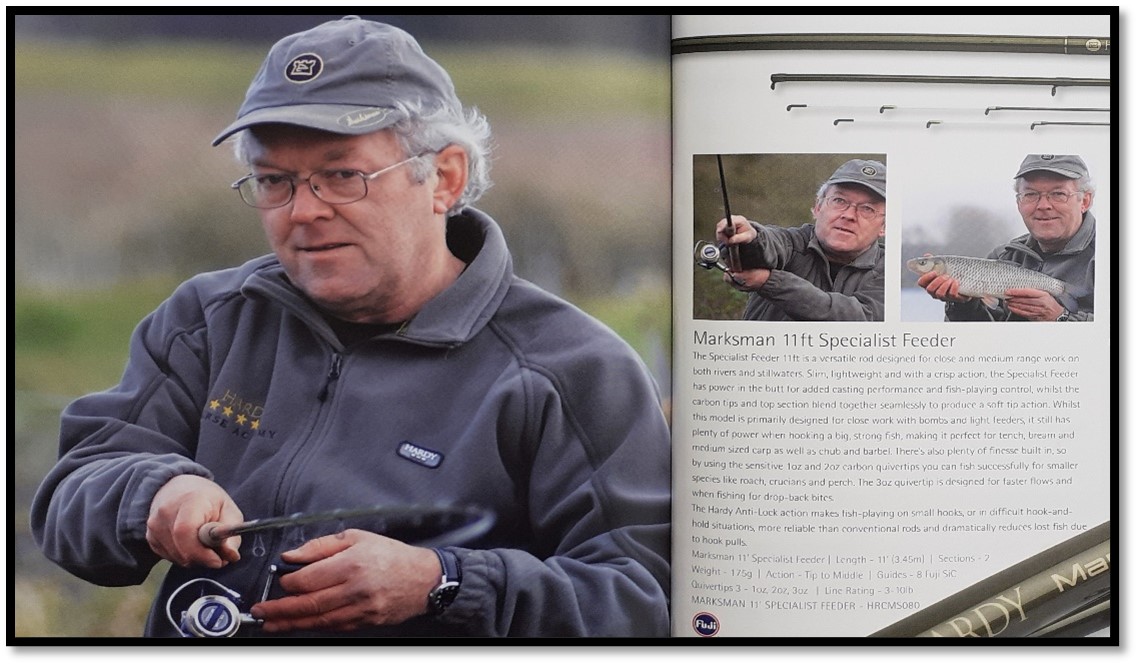
The most asked question I received when working as Coarse Product Development Manager for Hardy and Greys was, “Why make your top end rods in China?” My answer was quite simple. They would have been three to four times the price if made in the U.K. There’s nothing wrong with rods made in China anyway, providing their development and production is carried out properly. I took my job seriously and made sure that happened, spending many hours sitting around airports and on long haul flights. There was also some great talent at Hardy, including Tom Moran who crafted wonderful split cane fly rods in Alnwick. I became friendly with him and when such a master craftsman told me my rods were the business, I was over the moon.
GOING THE DISTANCE
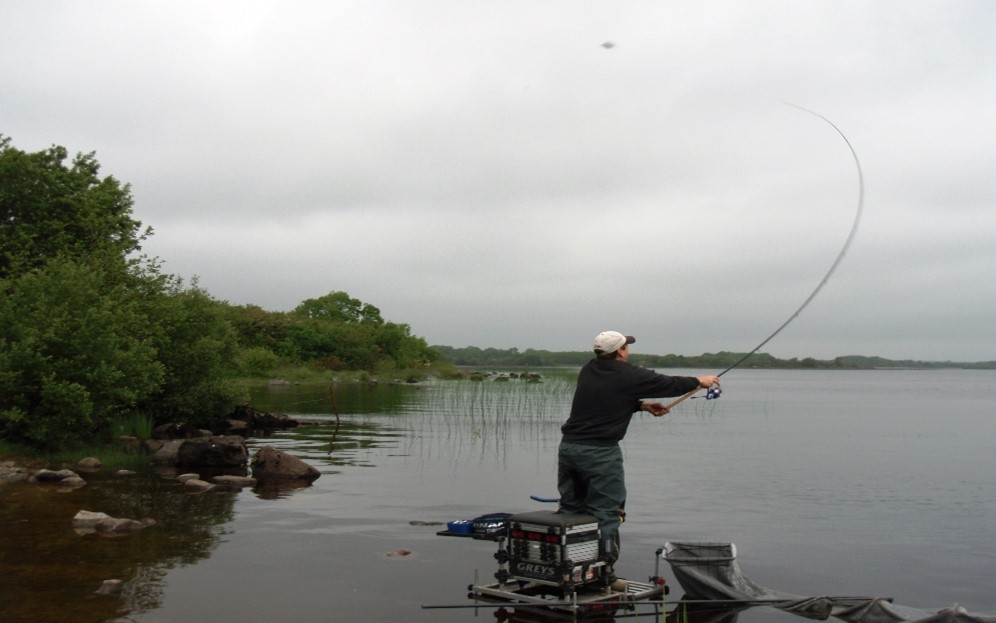
Something I insisted was important when developing new rods, was getting early samples into the right hands for testing. It was also a good excuse for a trip to the Emerald Isle, where coarse rods can be pushed to their limits. This is my mate Cathal Hughes, king of the Irish match scene, punching a feeder out a huge distance into a big Irish Lough. The rod seen here was the first 13ft Hardy Extreme Feeder, a model that has been much copied. It was one of the first long range feeder models to feature hollow carbon quivertips. These were a revelation, showing up bites when fishing big distances, while normal solid indicators didn’t register anything unless a fish positively swam off with the hook bait. The tips blended in better with the rod’s action, making the whole blank perfect.
HARDY FISH
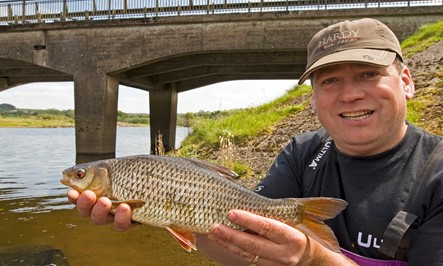
Although Cathal and myself came from a match background, we tried to put ourselves in the shoes of the type of anglers who would appreciate Marksman rods, people like John Bailey who helped to form the concept. We float fished for big roach, rudd and hybrids on the upper reaches of Innescarra Reservoir, pushing the Marksman Supero 13ft and 14ft Float Rods hard. It was beautiful, traditional style fishing, bagging up with pristine red fins up to the magical two-pound mark. The high modulus carbon we were using had just the right balance of enough casting backbone, combined with no chance of locking up prematurely, which became the famous Anti-Lock Marksman bullet point.

GOOD EXPERIENCES
What captivated me most about angling, when I first started as a youngster, wasn’t just about what I caught but the places I spent quality time enjoying. I’ve fished around the world, in places ranging from grubby industrial estates on urban canals, to wonderful scenarios like this over in County Cork. I see the canal thing as a match setting, while this was another world, as far away from modern life as is possible. Bringing a distinctive green Marksman into play on a place like this seemed the only right thing to do! That’s probably why there are never enough of these rods around, which is the reason Thomas Turner are looking at bringing something similar onto the market in the near future.

SWITCHING CAPS
Since being involved with the fishing industry, I’ve always disagreed with the way directors of many big tackle companies try to categorise anglers, to get an idea of the markets they are targeting. It’s all very well having match, green chair, game, predator and carp as the main audiences, but I know so many people who flit between all these groupings. In the same way, you could say the fish in the net on the left are what a Hardy coarse angler might catch, while the smaller stuff on the right sit in the match angler’s domain. Rubbish! Whether match or pleasure fishing I simply enjoy catch lots of fish. Seeing a float go under, or quivertip bend round. That’s what it’s all about!
